Mekong ASEAN Environmental Week (MAEW) 7th 2025 – Nakhon Phanom, Thailand
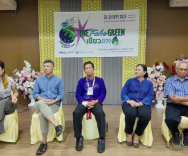
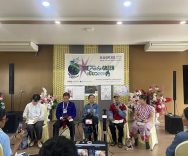
This session brought together voices from Indonesia, Southeast Asia, and Latin America to reflect on shared experiences of environmental destruction, extractive development, and large-scale energy projects. The discussion showed that although regions are far apart, the impacts on rivers, forests, and communities are deeply connected. Speakers compared situations across the Mekong region, Indonesian islands, and Latin America, and explored how future joint movements can be built beyond borders.
Indonesia’s Archipelago under Pressure – Hendro Sangkoyo
Hendro Sangkoyo from the School of Democratic Economy, Indonesia, opened the session by describing Indonesia as an archipelagic country with more than 17,000 islands. Since 2007, his team has worked directly with island communities, from the Mentawai Islands in western Sumatra to West Papua in the east. He explained that what Indonesia faces today is not accidental. It is the result of long-term historical, social, and ecological enclosure driven by state systems, technocracy, and global financial forces, including international institutions.
Over the past three decades, Indonesia has sacrificed both land and water. In Kalimantan alone, an area of more than half a million square kilometers, nearly one-third of the island has been opened to extractive industries such as coal mining and energy projects. Hendro shared that his team has mapped these changes island by island and updated the data every year.
He explained that between 1984 and 2012, Indonesia’s river systems collapsed rapidly. In 1984, 29 out of 89 major watersheds were already considered bankrupt or close to collapse. By 2012, more than 75 percent of the country’s watersheds were in extremely bad condition. This data came from the Ministry of Public Works itself. Despite this reality, the government continued to push for more dam construction in the name of electricity generation.
Hendro described rivers that are now biologically dead. In parts of Kalimantan, rivers have been poisoned by waste from oil palm plantations. Fish have disappeared. Clean water is no longer available. Communities who depend entirely on rivers for life now struggle to survive.
He also explained how carbon offset projects have become a new threat. Wetlands and rivers in Central Kalimantan have been captured as carbon concessions. These areas are sold as carbon stocks to global corporations such as Shell and ExxonMobil. At the same time, eastern Indonesia is being transformed into a massive nickel mining zone to support electric vehicles and so-called green transitions. Rivers have turned red from mining waste. Hendro stressed that these projects threaten life itself.
He compared this with experiences in Brazil and other regions. He explained that so-called clean energy such as hydropower and geothermal can cause damage equal to or worse than fossil fuels. These projects exist to support endless energy consumption, not community needs. Indonesia already produces twice the electricity it needs, yet the destruction continues.
Hendro ended by sharing stories of island communities who live with very little electricity. Some use traditional plant-based lighting. Their lives follow natural rhythms of day and night. He compared this with Indigenous communities in Brazil, showing that alternatives to energy-intensive lifestyles already exist.
Historical Destruction and New Green Expansion – Teresia Jari
Teresia Jari from the Nugal Institute explained that the destruction of Kalimantan did not begin recently. It has been ongoing since the 1750s. What communities face today is the continuation of colonial and post-colonial extraction.
She explained that Kalimantan is the third largest island in the world. At least nine major watersheds exist on the island. Only one remains healthy. The rest are either collapsing or already bankrupt. She showed how rivers such as the Mentarang and Kayan are now threatened by large hydropower dams.
These rivers have been home to Indigenous peoples such as the Punan and Kayan for more than 6,000 years. Two mega dams planned on these rivers will generate over 10,000 megawatts of electricity, mainly for export and industrial parks. Dense forests, rapids, fish habitats, and hunting routes will disappear. The electricity will not serve local people. It will serve green industrial projects backed by large corporations from Indonesia, Thailand, China, and Malaysia.
Teresia emphasized that these projects are presented as green solutions, but in reality they continue the same model of exploitation under a new name.
Indigenous Knowledge and Living Rivers – Merah Johansyah
Merah Johansyah from the Nugal Institute shared reflections from the Punan Indigenous people. For them, forests and rivers are like a mother’s breast milk. Women are the guardians of food knowledge and river life. They understand which plants, fish, and river zones sustain life.
The damming of the Mentarang and Kayan rivers threatens this knowledge. Rapids known as jir are essential breeding grounds for fish. Some species can only live in these fast-flowing areas. Once dams are built, these rapids will disappear forever. With them, fish, food systems, and cultural memory will also disappear.
Merah stressed that what is being destroyed is not only nature, but thousands of years of living knowledge.
Rivers as Living Bodies – Sudirman
Sudirman, a local leader from Indonesia, shared Indigenous understandings of rivers as living bodies. Springs are the head. Forests hold the DNA of life. Rivers carry this life energy downstream. When dams cut rivers, they cut life itself.
He compared this understanding with the Mekong River. From the Tibetan plateau to the Mekong Delta, dams have blocked the flow of life. As a symbolic act, Sudirman brought water from sacred mountains in Indonesia and shared it with the Mekong River, showing spiritual and ecological connections across regions.
Latin America’s Long Struggle – Leticia Oliveira
Leticia Oliveira from the Movement of People Affected by Dams in Brazil shared that Latin America faces the same problems as Southeast Asia. Dams, mining, floods, pollution, loss of fish, destruction of homes, high electricity prices, and violence against communities are common experiences.
In Brazil, affected people began organizing over 40 years ago. They learned that local struggles were not enough. The same companies caused harm in many places. Communities organized regionally, then nationally. In 1991, Brazil formed a national movement of people affected by dams.
Later, communities realized that companies operate globally. Brazilian mining and energy companies work in Indonesia and elsewhere. Thai companies operate abroad. Because corporations are global, resistance must also be global.
This led to international meetings of people affected by dams, including meetings in Brazil, Thailand, and Mexico. These gatherings declared that water and energy are not commodities and that another energy model is possible.
Leticia announced that the fourth international meeting of communities affected by dams and climate crisis will be held in the Amazon in November. This meeting aims to formally build an international movement across continents.
Shared Reflections and Future Joint Movement – Winnie Overbeek
Winnie Overbeek from the World Rainforest Movement reflected on how these connections began. Exchanges between Indonesia, Brazil, and Thailand helped communities understand dams, fake green energy, and shared struggles. Although languages and contexts differ, the impacts are strikingly similar.
She emphasized that dams are not clean energy. Research from the Amazon shows that hydropower can emit large amounts of methane, which is far more damaging than carbon dioxide. Climate change has also reduced river flows, making dams unreliable. In Brazil, major dams now operate at only a fraction of their capacity.
Winnie highlighted the importance of independent community monitoring. In Brazil, companies claim there is no impact on fisheries, while fishers catch only a few kilograms compared to hundreds before. Academics working with communities help expose these lies.
He ended by sharing Indigenous reflections that electricity is not always progress. For some communities, too much electricity brings noise, and loss of culture. They say, “Clean energy is energy without destruction.”
Audience and Participant Reflections
An audience member reflected that hearing experiences from Indonesia and Latin America helped them better understand the Mekong situation. They said the problems faced by Mekong communities are not isolated. Instead, they are part of a global system driven by profit and corporate power. The participant expressed that this realization made local struggles feel less lonely and more connected.
Another participant emphasized that the session helped them see how “green” language can hide real harm. They reflected that carbon markets, dams, and energy transition projects often appear positive on paper, but in reality shift the burden to rural and Indigenous communities. They stressed the importance of critical learning and cross-border solidarity.
A participant from a river-dependent community shared that the discussion deeply resonated with their lived experience. They said that rivers are not only economic resources, but the foundation of life, culture, and memory. Hearing Indigenous perspectives from Indonesia and Latin America gave them strength and encouraged them to continue defending their river.
Conclusion: From Comparison to Collective Action
This session showed that the Mekong, Indonesia, and Latin America face the same development model under different names. Dams, mining, carbon markets, and green industrial projects repeat the same patterns of harm. Rivers are sacrificed. Communities are displaced. Profits flow to corporations.
The discussion ended with a shared question. How can affected people unite more strongly across regions and continents? The answer lies in shared knowledge, solidarity, and building an international movement that puts life, rivers, and communities at the center of the future.