“There is only one answer to the question, ‘What will we do?’ We will stop it, cancel it, and not sign it.”
When discussing “UPOV 1991,” many people may think it is merely a legal framework designed to protect plant varieties, encourage the development of new varieties, and support free trade in the global market. However, for Thai farmers—especially small-scale farmers who rely on saving, replanting, or selling seeds—this agreement raises serious risks and concerns.
UPOV not only grants breeders the right to protect plant varieties they develop, but also limits farmers’ rights to save, share, and exchange seeds—practices that have been fundamental to Thai farming communities for generations.
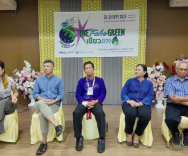
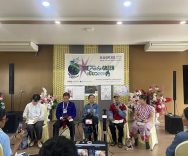
This section draws on the discussion titled “The Trend of the Seed Business and Its Impacts on Farmers’ Rights,” which aims to explain what UPOV is, how it differs from other systems, why the Thai government is pushing for it, and what impacts and concerns Thai farmers may face if Thailand joins.
Seed Control: Definitions and Corporate Strategies
Kartini Samon of GRAIN clarified the scope of seed laws and the strategies corporations use to control seeds.
“Seed laws” refers to intellectual property laws—such as patents and plant variety protection (PVP) systems, such as UPOV—as well as seed marketing regulations.
Definitions of Legal Categories and Their Impacts on Farmers
Patents grant exclusive rights for 20 years over innovations involving seeds, plant cells, genetic engineering, or genetic sequencing. This represents the strictest form of control, primarily intended to protect corporate technological investments.
Plant Variety Protection (PVP) is a form of “soft patent” for breeders, granting exclusive rights for 15–30 years over new plant varieties that are distinct, uniform, and stable. UPOV governs this system by establishing exclusive rights over plant varieties, thereby restricting farmers’ ability to save and reuse seeds.
Seed marketing laws set criteria that seeds must meet before entering the market. These criteria often mirror PVP standards—distinctness, uniformity, and stability—thereby excluding diverse local varieties that do not meet the “stability” requirement. As a result, farmers are increasingly compelled to use commercial seeds.
Kartini added that large corporations expand their influence and profits in the seed business through two main strategies. The first involves biological mechanisms, such as the use of hybrid seeds. The second involves legal mechanisms—intellectual property and market regulations—which restrict farmers’ rights to save, sell, and exchange seeds.
UPOV was founded in 1961 and has existed for more than 60 years. Member states are required to submit draft seed laws for review to ensure compliance with UPOV regulations. In this way, UPOV effectively influences national seed management systems through domestic lawmaking processes.
UPOV is an international organization established to regulate new plant varieties globally. There are four versions of the convention: 1961, 1972, 1978, and 1991. The most widely adopted version today is UPOV 1991.
Under World Trade Organization (WTO) obligations, established in 1992, each WTO member state must amend its laws to comply with regulations related to breeders’ rights. Thailand is subject to these obligations as well. While neighboring countries were granted transition periods, most have already adjusted their laws to align with UPOV standards.
Another legal mechanism affecting seed management is seed market regulation. Seeds that are legally traded must meet the requirements of distinctness, uniformity, and stability. This creates barriers to biodiversity-based restoration and excludes local farmers from formal markets. In several countries, such laws have been used to penalize farmers for selling seeds without official permits, as seen in Kenya and Tanzania.
“This approach is incompatible with the realities of farming,” Kartini explained. “Farmers constantly adapt to ecosystems, increase diversity, and develop varieties that evolve with the environment. The idea that seeds must be static rather than dynamic—even if they are high quality—is incompatible with climate adaptation.”
People’s Struggles Against the Privatization of Seeds and UPOV
Examples from Different Countries
In Benin, social movements successfully stopped parliament from considering a UPOV-based draft law.
In Zambia, farmers and social movements opposed World Bank loan conditions that pressured the country to join UPOV and amend its seed laws.
In Guatemala and Argentina, mass mobilizations demanded the withdrawal of proposed laws aligned with UPOV standards, commonly referred to as the “Monsanto Law.” These protests were part of broader national strikes.
In Malaysia and Indonesia, farmers and civil society groups are resisting free trade agreements—such as those with the EU—that require compliance with UPOV-like standards rather than protecting farmers’ rights to local seeds.
In the Philippines, farmers are leading efforts to strengthen farmers’ seed rights through alternative legislation that differs from UPOV.
These struggles share a common goal: defending seeds as a common, protecting biodiversity, and keeping seed systems in the hands of communities as a foundation of food sovereignty.
Kartini concluded by noting that Peru will hold another referendum in November on regulations that would allow greater private-sector access to genetic resources. Safeguards against exploitation remain uncertain, and it is unclear whether such access would lead to genuine technology transfer or merely increase corporate profits.
Protection of Plant Varieties in East Asia
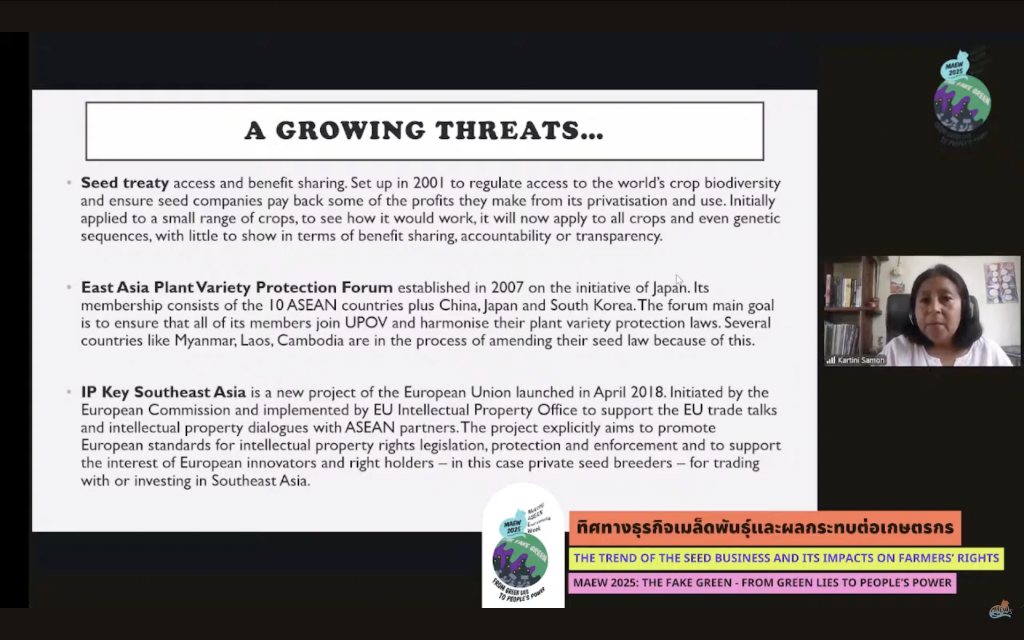
In East Asia, Japan is a major player in plant variety protection. Two Japanese companies dominate the regional seed industry, and Japan has played a leading role in driving seed law reforms across ASEAN.
China and South Korea are also influential actors in Southeast Asia, promoting legal changes related to seeds. These efforts have already led to reforms in Myanmar, Laos, and Cambodia that align with the UPOV 1991.
What Is UPOV and Where Does Thailand Stand?
Before summarizing why UPOV 1991 should be monitored closely—or rejected—Prokchol Ousap from BioThai reviewed the origins and principles of Thailand’s Plant Variety Protection Act of 1999. This law protects breeders’ new varieties while also recognizing farmers’ and communities’ rights.
Thailand has been a WTO member since 1995. In response to the Agreement on Trade-Related Aspects of Intellectual Property Rights (TRIPS), industrialized countries and transnational corporations pushed for stronger plant variety protection in Thailand and other developing countries.
Three policy options were considered. The first was patent-based protection for new plant varieties used industrially. The second was the adoption of the UPOV standards, which focus solely on breeders’ rights. The third was a sui generis system tailored to national conditions.
Thailand ultimately adopted a hybrid approach. The Plant Variety Protection Act of 1999 combines UPOV 1978 principles with recognition of farmers’ and communities’ rights, in line with FAO guidelines and the Convention on Biological Diversity (CBD), Prokchol explained.
Risks and Concerns if Thailand Joins UPOV 1991
Prokchol warned that UPOV 1991 would significantly expand breeders’ rights. All plant varieties would eventually be subject to protection, and protection periods would increase to 20–25 years. The scope of protection would extend to harvested products and derivatives, including “Essentially Derived Varieties (EDVs),” a concept not yet clearly defined in Thai law.
Under UPOV 1991, farmers’ rights to save and reuse seeds would depend on national implementation and could be severely restricted. The definition of “breeder” would also expand to include those who merely discover plant varieties.
Prokchol concluded that Thailand’s current law attempts to balance breeders’ rights with farmers’ rights. Joining UPOV 1991 would undermine this balance and pose serious risks to farmers’ livelihoods and biodiversity.
Learn more from
Compiled by: Orakod Suksawat (original version)
Reference: